
Downloads
Print files, templates, the whole buffet. Free. Open source.
Do something useful with them. Or not. What am I, your mother?
LidarAGL
Open Source v1A configurable advisory AGL box for experimental aircraft — spoken height callouts on the way down, an ascending flare tone, a variometer sink/climb cue, plus gear and positive-rate reminders, all set from a single cockpit button. An ESP32-S3 reads slant range from a belly-mounted LightWare SF30/C or SF30/D micro-lidar and drives your audio panel directly. WiFi and Bluetooth are off by design — no EMI into the avionics.
These print files are the smart threaded housing only. The firmware, full bill of materials, GPIO pinout, wiring, voice clips, and even a no-hardware web emulator all live on GitHub — hit the button.
Advisory only. Not certified equipment, and never a substitute for visual flare judgment — a wrong or late callout is worse than silence. Experimental/advisory use only, no warranty, used entirely at your own risk. Read the License and Disclaimer before you build, install, or fly it.
Print Files 3
The housing is its own compression fitting — an integral thread clamps it into a single 2.5″ skin hole with no screws. Full assembly, lens spec, and torque are on GitHub.
Main Body
Threaded housing body — holds the lidar and electronics
Compression Nut
Threads onto the body to clamp the housing to the skin
Cap Nut
Retains the acrylic lens over the optical window
Documentation 1
Installation & Owner's Manual
Full install, 6-conductor wiring, config, and use guide
ADSBin
Open Source v1A receive-only ADS-B (1090ES) traffic receiver built on the ESP32-P4 for under $100. It decodes 1090 MHz broadcasts from nearby aircraft and re-emits them as GDL90 traffic for an EFB (ForeFlight, Garmin Pilot) or a panel display. Plug in a second dongle and the firmware auto-detects it for 978 UAT / FIS-B weather. Thumb-drive sized, passively cooled, and runs off ship power or any USB battery bank.
These print files are the PA612-CF enclosure only. The firmware, full bill of materials, antenna and wiring notes, and the bench-validation harness all live on GitHub — hit the button.
Receive-only, advisory traffic awareness for experimental aircraft. It is not certified, not a collision-avoidance system, and never a substitute for see-and-avoid or pilot judgment. It cannot transmit and does not satisfy any ADS-B Out mandate. Read the License and Disclaimer before you build, install, or fly it.
Print Files 3
Print in PA612-CF — the carbon-fibre nylon is RF-transparent enough for the internal antenna and tolerates the heat. Case closes with M2 self-tapping screws.
Main Body
Main enclosure body — holds the ESP32-P4 and dongle(s)
Lid
Primary enclosure lid
Secondary Lid
Secondary lid panel
ergoMAXX Flight Stick
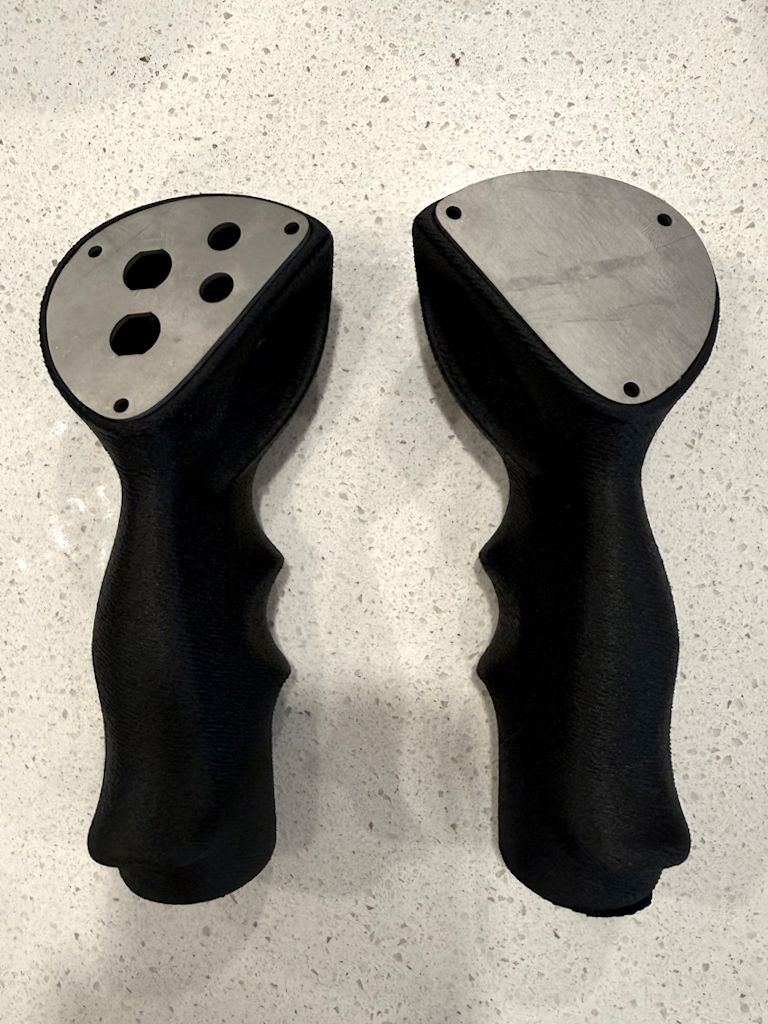
Open Source v4Print the grip body in PA612-CF or whatever else won't catch on fire. Faceplates are designed for CNC or printing. DXF included if you want to cut your own plates.
Seriously — print these in something temperature-resistant and FR. That means no PLA, no PETG. The last thing you want is your flight stick melting in the summer sun.
Print Files 2
This is the pilot (left) grip. Mirror it to get the copilot (right) side.
Faceplate DXF 4
These DXF files are for the pilot (left) side. For the copilot (right) side, mirror the DXF horizontally. If laser cutting, undersize the outer edge by 1/32″ for a snug press-fit. Uses #6 self tapping screws.
Documentation 1
Recommended Print Settings
- Material
- PA612-CF
- Layer Height
- 0.20mm
- Walls
- 3
- Infill
- 25% 3D Honeycomb
- Supports
- None
- Detect Thin Walls
- Enabled
- Bridge Speed
- 10mm/s
- Bridge Flow Ratio
- 1.5
- Brim
- Outer 20mm
- Top Pattern
- Hilbert Curve
ergoMAXX Slim
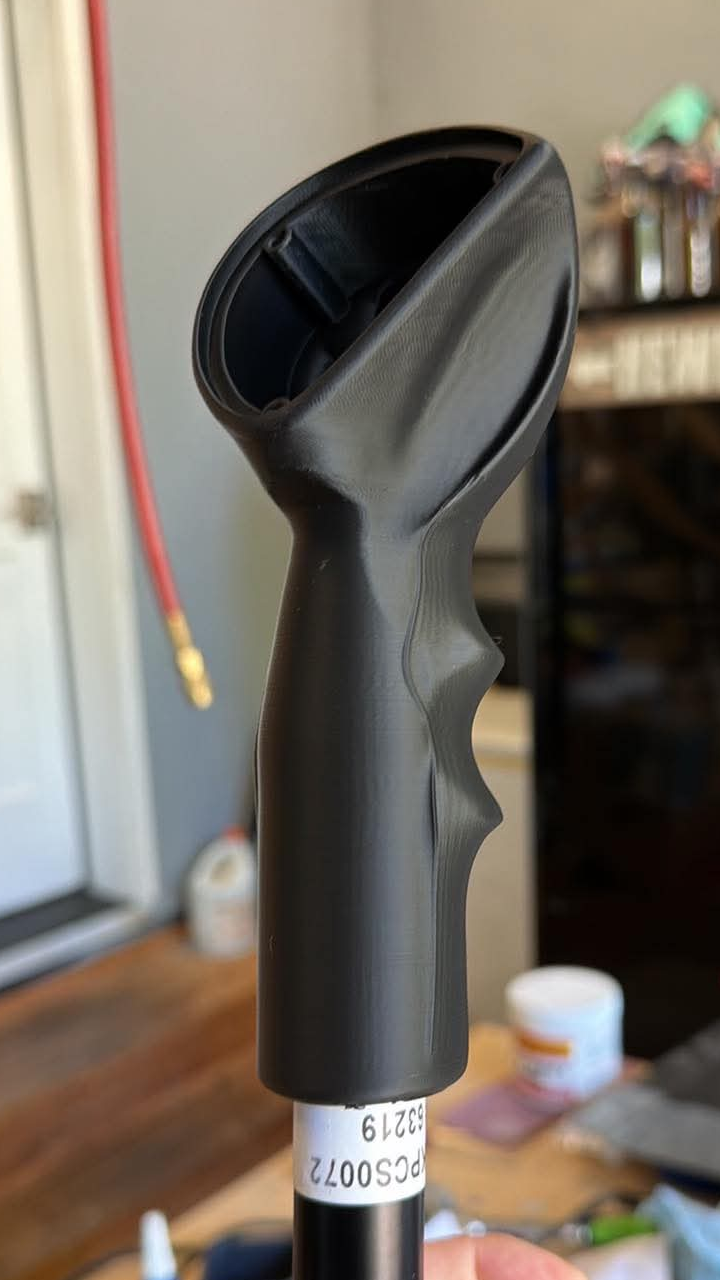
Open Source v1The same ergoMAXX grip, trimmed down for smaller hands. If the standard body feels like palming a basketball, this one's for you. Identical shaft fitment, identical electronics — just a slimmer profile your fingers can actually wrap around.
Same print rules as the standard ergoMAXX — temperature-resistant, FR material only. Faceplate DXFs, button caps, and the user manual are shared with the standard grip; grab those from the ergoMAXX section above.
Print Files 2
This is the pilot (left) grip. Mirror it to get the copilot (right) side.
Recommended Print Settings
- Material
- PA612-CF
- Layer Height
- 0.20mm
- Walls
- 3
- Infill
- 25% 3D Honeycomb
- Supports
- None
- Detect Thin Walls
- Enabled
- Bridge Speed
- 10mm/s
- Bridge Flow Ratio
- 1.5
- Brim
- Outer 20mm
- Top Pattern
- Hilbert Curve
PanelBoxx
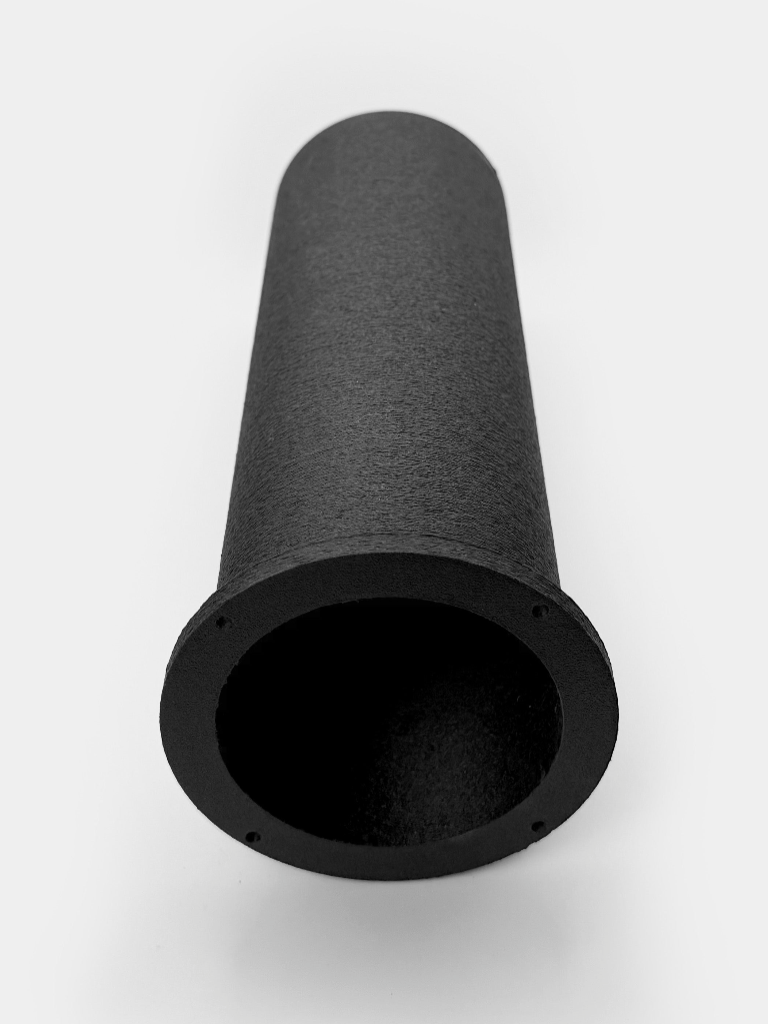
Open Source v1Slide-in gloveboxes for standard instrument panel cutouts. Printed in PA612-CF with fuzzy skin texture. Pick the size that fits your hole. Heh.
Print Files 7
Lids are included for 1×1, 1×2, and 1×3 sizes. The 2×3 does not have a lid.
Recommended Print Settings
- Material
- PA612-CF
- Infill
- 25% 3D Honeycomb
- Brim
- None
- Fuzzy Skin Scope
- Contour and Hole
- Fuzzy Skin Type
- Classic
- Fuzzy Skin Point Dist.
- 0.3mm
- Fuzzy Skin Thickness
- 0.2mm
Bi-Directional PWM Amplifier
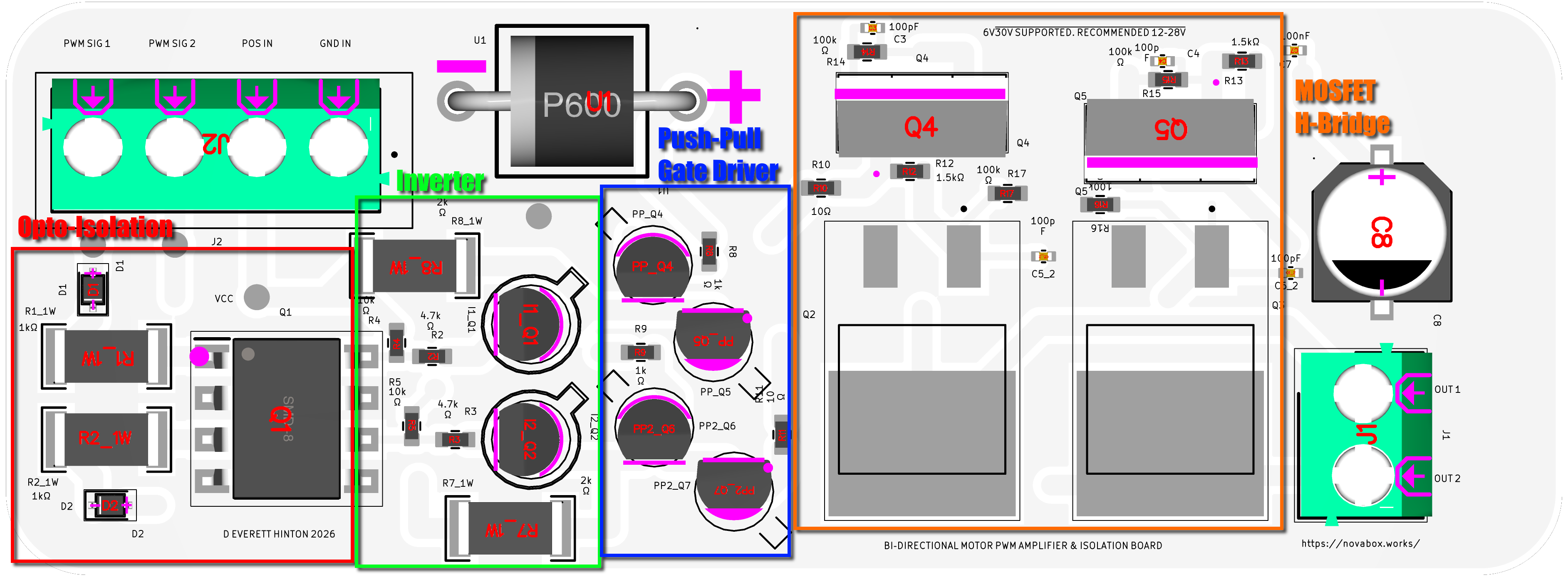
Open Source v8Full H-bridge motor driver with optocoupler isolation. Schematic, PCB layout, BOM, gerbers, and the complete installation manual — everything you need to build it yourself or just understand how it works.
Print Files 2
The lid attaches to the case with zip ties as a hinge — drill two small holes on the case edge, loop the ties through, done. Simple, light, and field-replaceable.
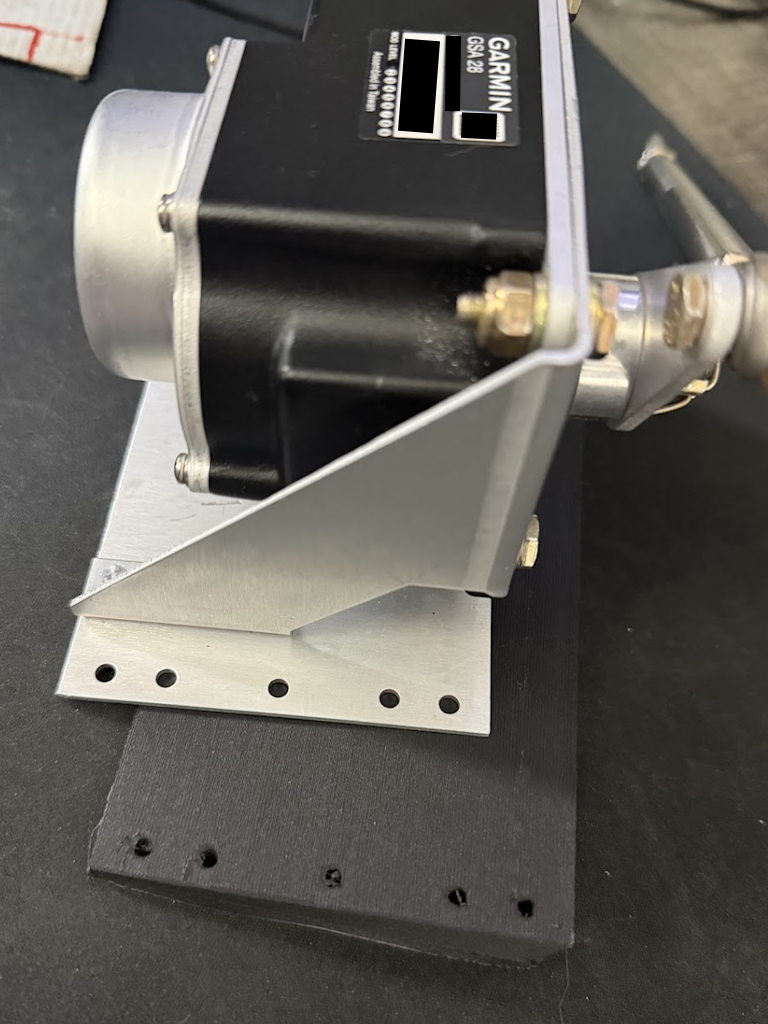
GSA 28 Angle Wedge
Open Source v1Angles the Garmin GSA 28 metal mounting bracket (PN 115-01854-00) upward to align the servo pushrod with the control surface. Print in PA612-CF with thick infill and 4-6 walls. All holes must be drilled to final size after printing.
This part MUST be used sandwiched between the metal Garmin GSA 28 bracket and the airframe mounting surface — never as the sole structural mount. 3D printed parts excel at compressive loads, and that is the only reason this works in a safety-critical autopilot installation. The wedge must remain under compression between two metal or fiberglass surfaces at all times. If you use this without the metal bracket, you are doing it wrong and people could get hurt.
Recommended Print Settings
- Material
- PA612-CF
- Infill
- 60%+ (thick)
- Walls
- 4–6
- Holes
- Drill to final size after printing
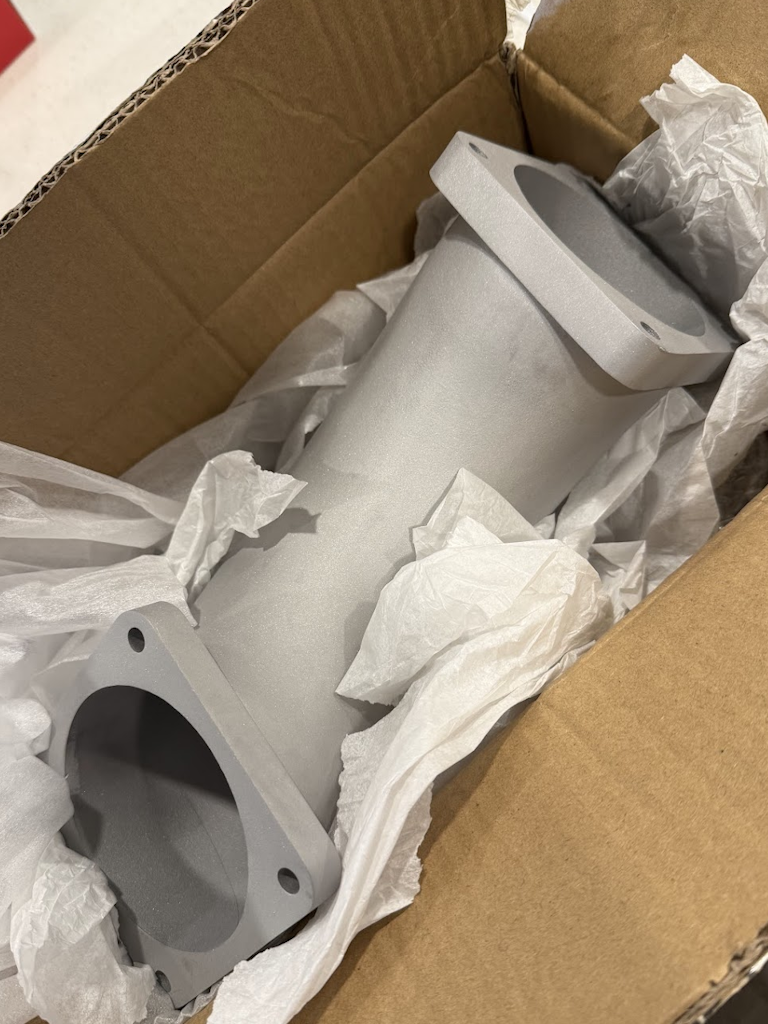
IO-540 Air Intake Servo 90° Bracket
Open Source v190-degree mounting bracket that bolts the fuel injection servo to the air intake on Lycoming IO-540-K series engines. Carries the full weight of the servo. Designed for the Glasair III — experimental aircraft only. Full CAD source included so you can adapt it to your installation.
This bracket carries the full weight of the fuel injection servo. It MUST be printed in METAL (stainless steel, Inconel, titanium, or aluminum). Plastic — even PA612-CF — will experience creep under the sustained load and engine bay temperatures, slowly deforming until it fails. That is not a question of if, but when. Metal sintering services are widely available — use one. If you absolutely must use PA612-CF, limit it to non-aviation applications like airboats where the failure mode is an inconvenience, not a catastrophe. Experimental aircraft only.
CAD Files 2
Recommended Print Settings
- Material
- METAL ONLY (Al / SS / Ti / Inconel)
- Process
- DMLS / SLM / Metal Binder Jetting
- Post-Processing
- Bead blast, drill or file holes to final size
- Fitment
- Glasair III, IO-540-K series
- Sealant
- Gasket LW73032 x2
- Certification
- Experimental only
SlimTUGG
Coming SoonA foldable universal aircraft tug rated for aircraft up to 3,000 lbs. Folds down to about the size of a large fire extinguisher, weighs under 25 lbs, and runs on a hot-swappable 48V battery. Designed to live in the baggage compartment — not the hangar.
Need the full CAD source files?
Parametric CAD files (STEP/Fusion 360) are available on request.
Contact me